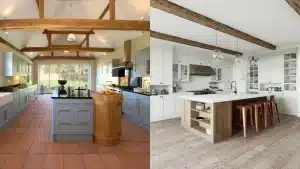
You’re staring at your kitchen plans, picturing a long, beautiful island where everything happens. Coffee in the morning, kids doing homework, guests gathering at night. It feels right… until a question creeps in.
“Is this going to be too big?”
That hesitation is worth listening to. A 10-foot island can elevate a kitchen, or it can quietly disrupt how the space works every single day.
What a 10-Foot Kitchen Island Really Means
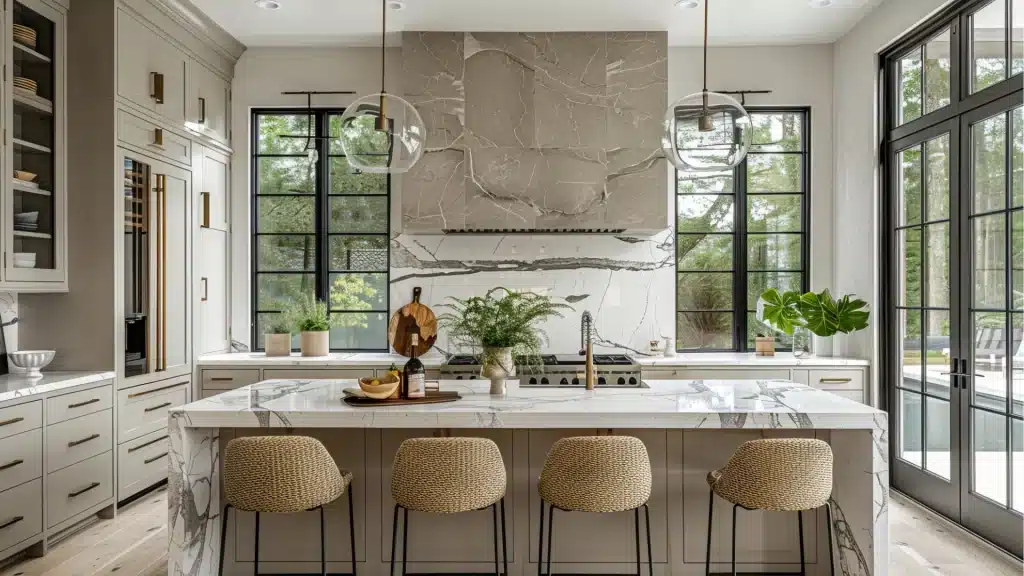
It’s not just size. It’s how your whole kitchen functions.
A 10-foot island is a statement piece, often found in open-concept homes across Southeastern PA, from Pottstown to Collegeville and Phoenixville.
Here’s where many homeowners get this wrong. They design the island first and the workflow second.
In reality, the island controls:
- Movement through the kitchen
- Where people gather
- How prep, cooking, and cleanup happen
The better approach is simple. Start with how you live, then size the island to match.
The Space You Actually Need
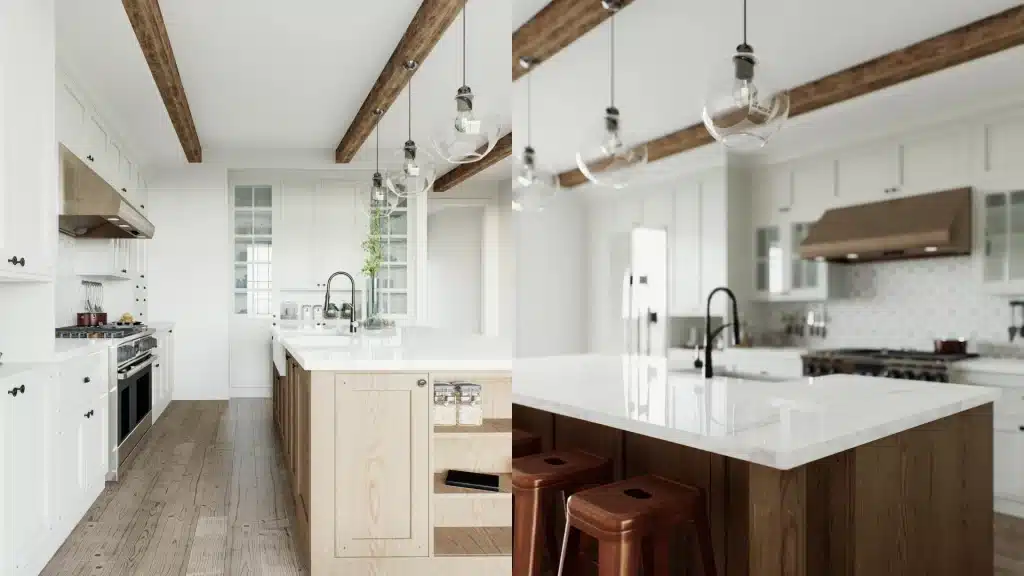
Clearance matters more than length.
For a 10-foot island to feel comfortable, your kitchen needs enough surrounding space to support it.
General layout guidelines:
- 42–48 inches for standard walkways
- 48–54 inches for busy kitchens with multiple people
- Around 15–18 feet total kitchen width for balance
Anything tighter starts to feel cramped, even if the island itself looks impressive.
This is the part that often gets overlooked. You’re not just placing an island. You’re shaping how the entire kitchen flows.
When a 10-Foot Island Works Best
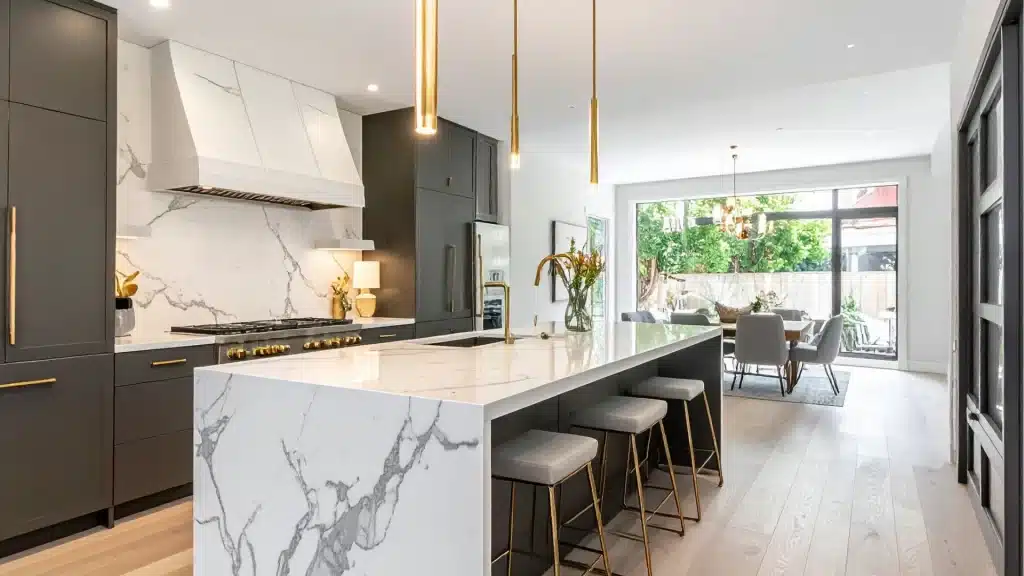
It thrives in homes built around gathering.
A larger island works beautifully when your kitchen is the center of daily life.
It tends to make sense if:
- Your kitchen opens into living or dining areas
- You host friends or family regularly
- More than one person cooks at a time
- You need both prep space and seating
Think about a typical morning. Someone making coffee, someone packing lunches, someone scrolling emails.
In homes across Collegeville and King of Prussia, especially with busy families, the island becomes a shared workspace that keeps everything moving smoothly.
When It Starts to Feel Too Big
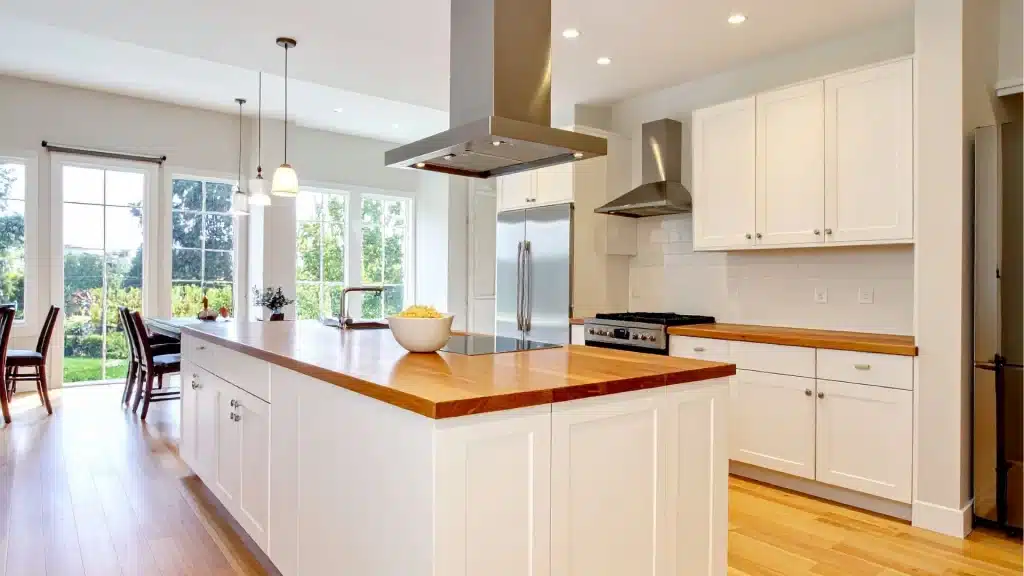
More space can create more friction.
At first, a bigger island sounds like a safe choice. More room, more flexibility.
But here’s the catch. If the kitchen doesn’t support it, that extra size works against you.
A 10-foot island can feel oversized when:
- The kitchen is enclosed or broken into sections
- You rarely entertain
- Meals are quick and functional
- You prefer a clean, minimal look
You might even wonder, “Will this just collect clutter?”
That’s a real outcome. Larger surfaces tend to attract more stuff, which can make the space feel busier instead of calmer.
Seating vs Workspace: The Trade-Off
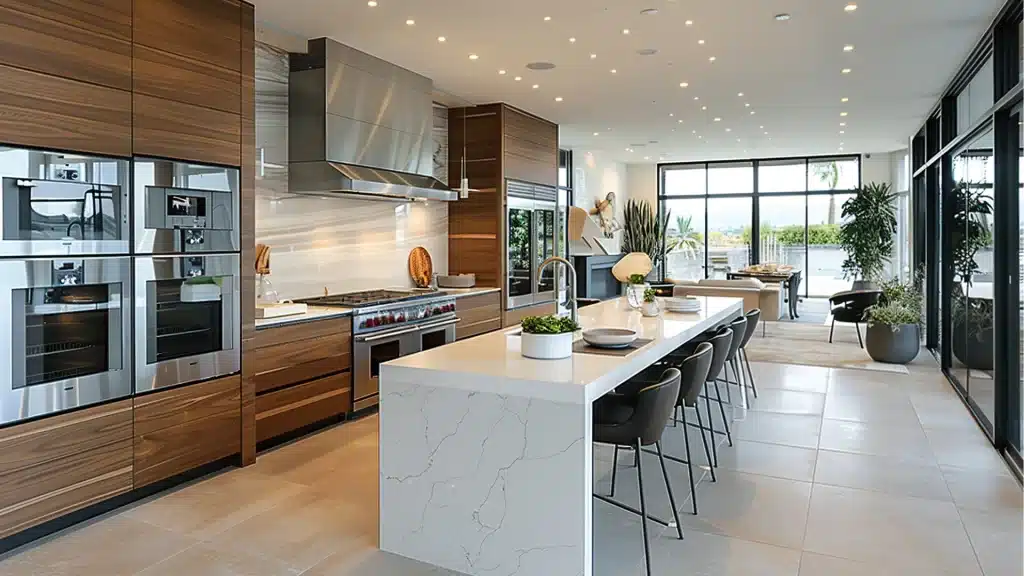
Every choice has a cost.
A 10-foot island gives you flexibility, but not unlimited flexibility.
Typically, it can handle:
- 4–5 seats comfortably
- Or fewer seats with more prep space
Here’s the trade-off to think about:
- More seating means less room to work
- More workspace means less room to gather
If your kids eat breakfast there every day, seating matters. If you cook often, workspace becomes more valuable.
There’s no universal answer. The right balance depends on how your household actually uses the space.
Material Pairing Guide for Large Islands
The bigger the island, the more attention it draws. That makes material choices more important.
Here are combinations that consistently work well:
- Quartz countertop + wood base
Clean, durable, and warm - Marble-look quartz + painted cabinetry
Timeless without feeling heavy - Waterfall edge + flat panel cabinets
Modern and streamlined - Mixed surfaces (stone + butcher block section)
Practical with subtle contrast
Here’s where people often overthink things. Not everything needs to stand out.
In many high-end kitchen layouts in Chester Springs and Wayne, the best designs use contrast sparingly to keep the space feeling cohesive over time.
Quick Reality Check
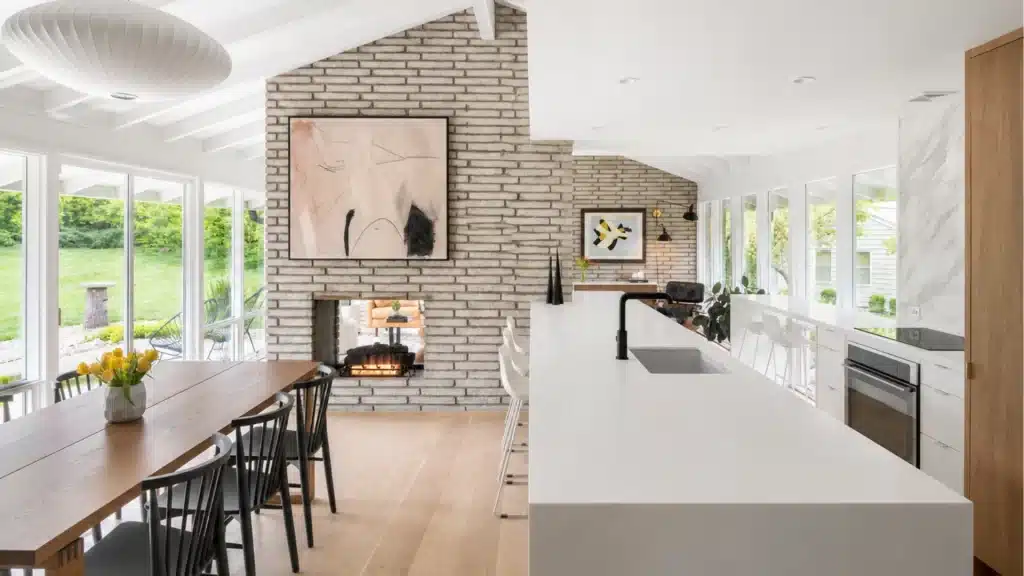
Before committing, take a moment to picture your daily routine.
- Where do you naturally prep food?
- Where do people tend to sit or stand?
- Where does clutter usually build up?
If the island supports those habits, you’re on the right track. If not, it may need adjusting.
If you’re still unsure, this is a great time to talk through ideas with a designer who can map your space around your lifestyle.
Layout Details That Make It Work
Small choices create big differences.
A 10-foot island feels effortless when the details are handled well.
Key tips:
- Offset sinks or cooktops slightly for better flow
- Use two-tone cabinetry to break up the length visually
- Keep lighting balanced with 2–3 pendant fixtures
- Avoid packing in too many appliances
These decisions help the island feel intentional, not overwhelming.
Project Spotlight
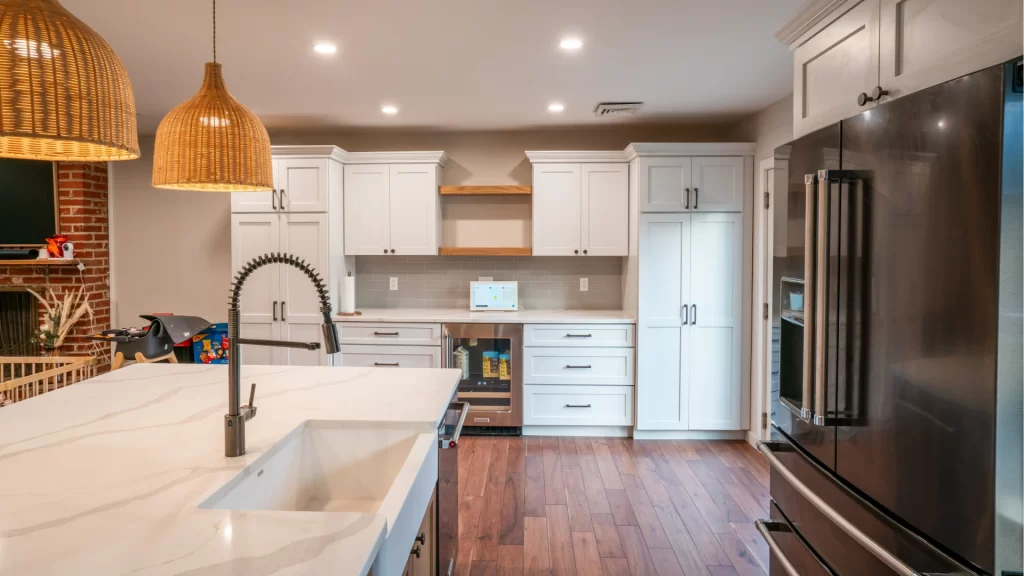
In Schwenksville, PA, a full kitchen remodel turned a tight, underused layout into an open, functional space.
The project included a kitchen expansion, wall removal, custom cabinetry, a well-sized island, updated flooring, and new countertops. The result is a space that feels easy to use and visually balanced.
See the full project here.
A Better Way to Decide
Design for your life, not just the look.
Instead of asking if 10 feet is too big, ask:
- Does this improve how we use the kitchen daily?
- Will this feel manageable long-term?
- Does it make the space easier, not harder?
In many custom kitchens across Montgomery County, the most successful layouts are the ones that quietly support everyday life.
FAQs
Is a 10-foot kitchen island expensive?
Yes, it typically costs more due to added materials, labor, and customization, especially in high-end kitchens.
How long does a kitchen remodel take?
Most full kitchen remodels take about 6 to 12 weeks depending on the scope and complexity.
Can a small kitchen handle a 10-foot island?
Usually no, since it can restrict movement and make the space feel crowded.
What’s the ideal island size for most homes?
For many households, 7 to 9 feet offers the best mix of function and comfort.
Final Thoughts
A 10-foot kitchen island can be a great choice, but only when it fits your space and your routine.
When it’s designed with intention, it becomes the center of daily life. When it’s oversized for the layout, it creates friction you feel every day.
If you’re planning a kitchen remodel in Pottstown, Limerick, Oaks, or nearby communities, taking the time to get this decision right makes all the difference.
Ready to explore your options? Let’s talk.