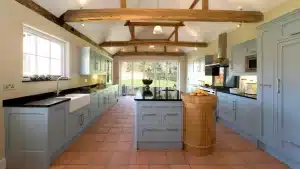
Thinking about whether you need a kitchen island for your upcoming remodel? You’re not alone. This question comes up in nearly every kitchen renovation conversation we have with homeowners across Southeastern Pennsylvania.
Kitchen islands have become the heart of modern homes. But do you actually need one? The answer depends on your space, lifestyle, and budget.
What Makes Kitchen Islands So Popular?
Kitchen islands are evolving into multipurpose hubs that serve far beyond simple food prep. They’ve become central gathering spots where families connect and guests naturally congregate during parties.
The popularity stems from their versatility. Islands can house everything from extra storage to built-in appliances. They create natural boundaries in open concept kitchen layouts while maintaining visual flow throughout your home.
Kitchen Island Pros and Cons: The Complete Breakdown
The Advantages
- Extra Counter Space More prep area means easier cooking, especially when multiple people work in the kitchen. You can chop vegetables while someone else handles the stove.
- Additional Storage Islands provide cabinets, drawers, and shelving that maximize every square foot. This extra storage helps keep countertops clutter-free.
- Enhanced Social Hub Islands with seating create casual dining spots and homework stations. They keep conversations flowing during meal prep.
- Increased Home Value Well-designed islands typically boost resale value, making them smart investments for homeowners planning future moves.
Better Workflow Strategic island placement improves kitchen triangle efficiency between sink, stove, and refrigerator.
The Drawbacks
- Space Requirements Experts recommend there be at least 36 inches of space on either side of a kitchen island. Many kitchens simply don’t have adequate room.
- Higher Costs Islands require additional cabinetry, countertops, and potentially electrical or plumbing work. Budgets can escalate quickly.
- Potential Traffic Issues Poorly placed islands create bottlenecks and awkward navigation patterns, especially in smaller kitchens.
Maintenance Considerations More surfaces mean more cleaning. Large islands can accumulate clutter if not properly organized.
Do I Need a Kitchen Island? Key Questions to Ask
Before deciding, consider these essential factors:
Space Assessment A kitchen island should be at minimum 4 feet long by 2 feet wide in order to be useful. Measure your kitchen carefully. Can you maintain proper clearances while accommodating your desired island size?
Lifestyle Fit How do you use your kitchen? Large families benefit from extra seating and storage. Empty nesters might prefer more open floor space.
Budget Reality Islands can range from $3,000 to $15,000 or more. Factor in all costs including installation, electrical, and plumbing modifications.
Functionality Goals What problems are you trying to solve? Lack of prep space, insufficient storage, or desire for casual seating each suggest different island approaches.
Kitchen Island Ideas for Your Remodel
Size and Layout Options
Island Type | Best For | Typical Dimensions |
Compact Island | Small kitchens | 4′ x 2′ minimum |
Standard Island | Medium kitchens | 6′ x 3′ |
Large Island | Spacious kitchens | 8′ x 4′ or larger |
Peninsula | Limited space | Attached to existing cabinets |
Trending Design Ideas for 2025
- Multi-Level Islands Different heights accommodate various activities. Lower sections work for food prep while raised areas provide casual dining.
- Statement Materials Throughout 2024, and continuing into 2025, we have seen dramatic stone backsplashes (matching kitchen worktops) rise in popularity. Bold materials create focal points that define your kitchen’s personality.
- Built-In Functionality Modern islands incorporate charging stations, wine storage, and specialty appliances. Think beyond basic cabinets to create truly functional spaces.
- Mixed Textures Combining materials like wood and stone adds visual interest while maintaining cohesion with your overall design.
Ready to explore island options for your space? Our team specializes in creating functional, beautiful kitchen designs that work within your specific layout constraints.
Open Concept Kitchen Layout Considerations
Waterproofing Is Critical
Islands play crucial roles in open concept designs. They define kitchen boundaries without blocking sight lines to living areas. This creates natural conversation flow while maintaining distinct functional zones.
Consider how your island will interact with adjacent spaces. Will it block traffic patterns between rooms? Does it provide adequate separation between cooking and living areas?
Alternatives When Islands Won't Work
Not every kitchen can accommodate a full island. Consider these alternatives:
- Peninsula Addition Connected to existing cabinets, peninsulas provide similar benefits in smaller footprints.
- Rolling Carts Mobile options offer flexibility and can be stored when extra floor space is needed.
Extended Countertops Sometimes simply extending existing counters provides the extra workspace you need.
Material Selection Matters
Choose non-slip flooring materials and water-resistant wall treatments. Large-format tiles minimize grout lines where water could penetrate, but require expert installation.
Our Design-Build Approach
At Pottstown Construction Company, we understand that every kitchen is unique. Our design-build process ensures your island perfectly fits your space, lifestyle, and budget. We handle everything from initial concepts through final installation, making your remodel seamless and stress-free.
We recently completed a stunning transformation for the Vargo family, where we converted an underused space into a stunning, functional kitchen. The project showcased how thoughtful island design can completely transform both functionality and aesthetics. Their new island became the perfect gathering spot while providing essential storage and prep space their growing family needed. You can see the full transformation in our Project Spotlight article.
Frequently Asked Questions
How much space do I need around a kitchen island?
You need at least 36 inches of clearance on all sides of your island for comfortable movement. This ensures people can walk around easily and cabinet doors can open fully without creating bottlenecks.
What's the average cost of adding a kitchen island?
Kitchen islands typically range from $3,000 to $15,000 or more, depending on size, materials, and features. Basic islands with simple cabinetry cost less, while islands with built-in appliances, electrical work, or premium materials increase the investment significantly.
Can I add an island to my existing kitchen?
Many existing kitchens can accommodate islands, but it depends on your available space and layout. A kitchen remodeling professional can assess whether your current kitchen has adequate room and help you explore alternatives like peninsulas or rolling carts if a full island won’t work.
Do kitchen islands really increase home value?
Yes, well-designed kitchen islands typically boost resale value and appeal to potential buyers. However, the key is “well-designed” – islands that create traffic problems or feel cramped in small spaces can actually hurt your home’s marketability.
Making Your Decision
Kitchen islands aren’t right for every home, but when they work, they transform how you use your space. The key is honest assessment of your needs, space, and budget.
Consider consulting with experienced kitchen remodeling professionals who understand local building codes and design trends. We serve homeowners throughout Pottstown, Chester Springs, Phoenixville, Collegeville, Oaks, Limerick, Wayne, and King of Prussia PA, bringing combined years of expertise to every project.
For kitchen remodeling in Pottstown PA and surrounding areas, working with knowledgeable contractors ensures your island addition enhances rather than hinders your kitchen’s functionality.
Remember, the best kitchen island is one that serves your specific needs while fitting seamlessly into your existing space. Take time to plan carefully, and you’ll create a feature that adds value and enjoyment for years to come.
Ready to explore your options? Let’s talk about creating the perfect kitchen island for your home.