You’re standing in the showroom with your cabinet hardware in one hand and your faucet sample in the other. You love the warmth of brushed brass, but your appliances are stainless steel, and that matte black pendant light keeps catching your eye.
Now comes the question almost every homeowner asks:
Can you mix metal finishes in a kitchen without making it look like a mistake?
The short answer is yes. In fact, many of today’s most beautiful kitchens intentionally mix metal finishes. The difference between a professionally designed space and one that feels mismatched isn’t whether the metals match. It’s whether there’s a clear design plan behind them.
What Does It Mean to Mix Metal Finishes?
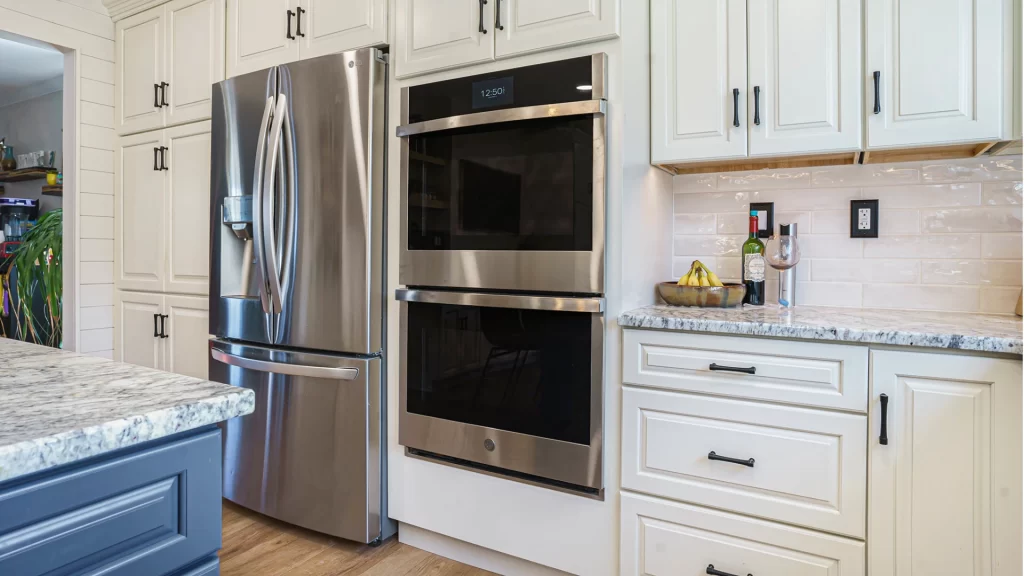
Mixing metal finishes simply means using more than one metal throughout your kitchen. That could include combinations like brushed brass cabinet hardware with a matte black faucet, or stainless steel appliances paired with satin nickel lighting.
Rather than matching every fixture exactly, designers use different finishes to create depth, contrast, and visual interest. When done thoughtfully, the result feels layered and timeless instead of overly coordinated.
The goal isn’t perfect matching. The goal is balance.
Why Homeowners Choose Mixed Metal Finishes
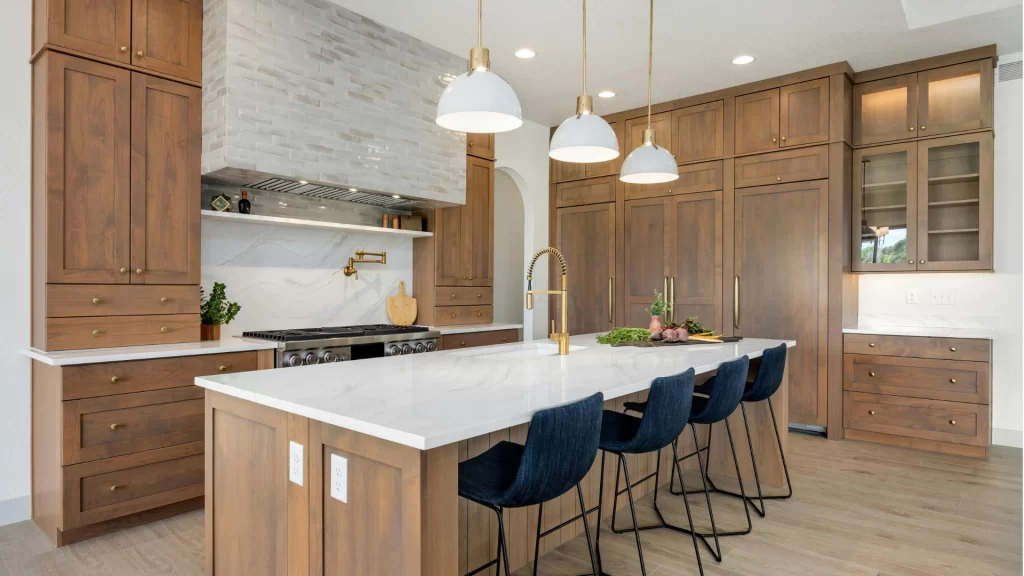
For many years, kitchens followed one simple rule: everything had to match. Today, homeowners are embracing a more personalized approach.
Mixing finishes allows you to:
- Add warmth and character to the space.
- Highlight key features like the kitchen island or sink area.
- Create contrast without overwhelming the design.
- Give your kitchen a more custom, designer-inspired appearance.
One of the biggest misconceptions is that mixing metals automatically creates visual clutter. In reality, carefully selected finishes often make a kitchen feel more refined than using the same metal everywhere.
When Mixing Metals Works Best
The easiest way to create a cohesive look is to establish a design hierarchy.
Instead of asking, “Which finishes should match?” ask:
“Which finish should be the star of the kitchen?”
Choose one dominant finish, then use one or two supporting finishes to add contrast.
For example:
| Element | Recommended Finish |
|---|---|
| Cabinet Hardware | Brushed Brass |
| Faucet | Matte Black |
| Appliances | Stainless Steel |
| Pendant Lighting | Brushed Brass or Matte Black |
One important detail many articles overlook is that your stainless steel appliances already occupy a large amount of visual space. They naturally become part of your metal palette, even if you don’t think of them that way.
That means you’re rarely starting with a completely blank canvas.
When Mixing Metals Can Feel Messy
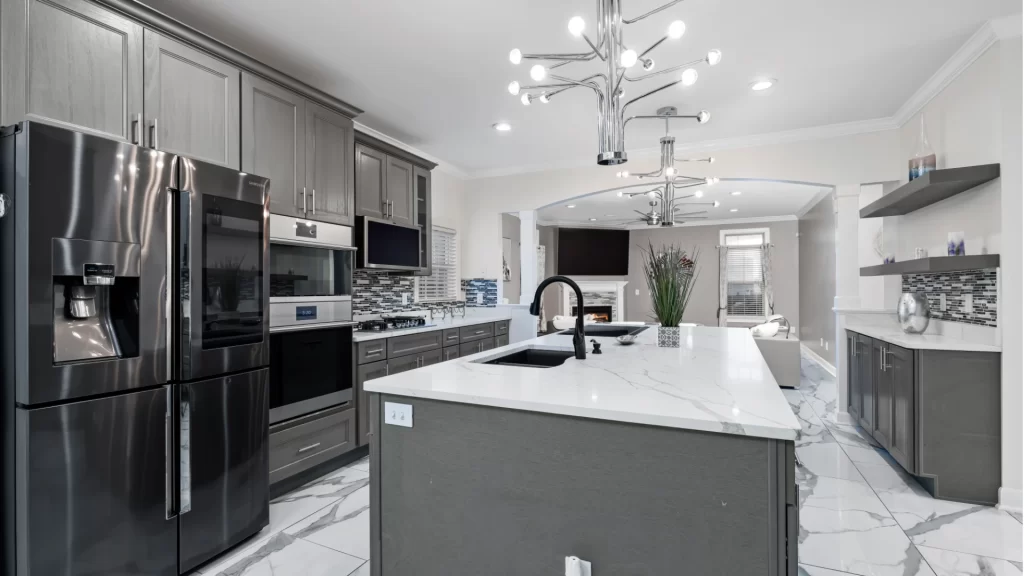
Mixed metals usually feel unplanned for one simple reason:
A finish appears only once.
Imagine installing a brass faucet while everything else is black or stainless steel. Instead of looking intentional, the faucet can feel disconnected.
A better approach is to repeat each finish at least two or three times throughout the room.
For example:
- Brass faucet
- Brass cabinet hardware
- Brass pendant light accents
Repeating a finish creates rhythm, helping the eye move naturally around the space.
Another common mistake is treating cabinet hardware as the starting point for the design. In reality, plumbing fixtures often remain in place much longer than cabinet pulls, which are relatively inexpensive to replace later. Choosing your long-term finishes first gives you greater flexibility as styles evolve.
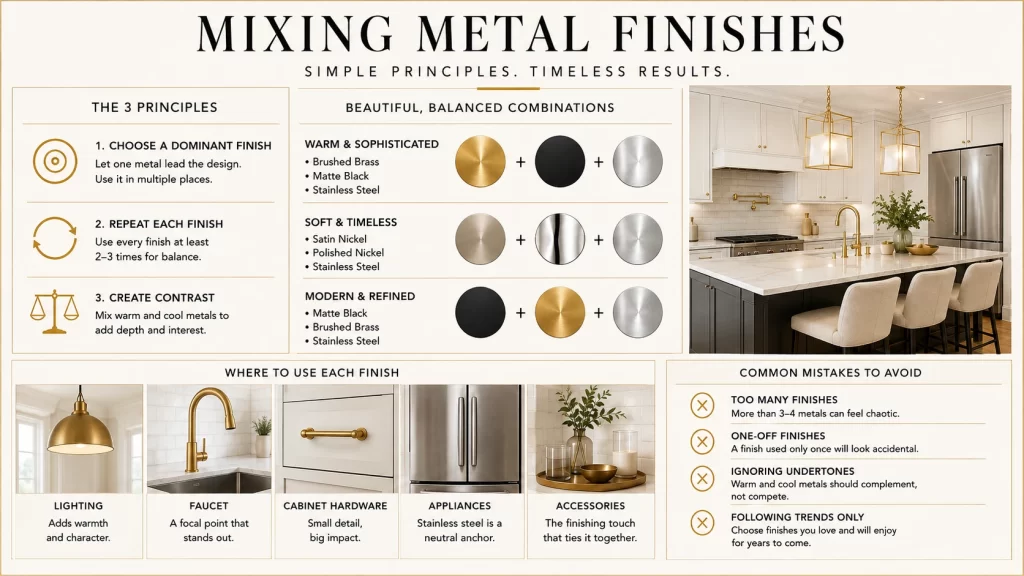
Design Tip: Let Your Materials Guide the Metals
Cabinet color, flooring, and countertops often influence metal finishes more than homeowners expect.
Warm wood tones, cream cabinetry, and natural stone generally pair beautifully with warmer metals like brushed brass or bronze.
Cool whites, gray cabinetry, and modern quartz surfaces often complement brushed nickel, chrome, or matte black.
Rather than forcing a trendy finish into the design, consider which metals naturally enhance the materials you’ve already selected.
How Pottstown Construction Company Helps Homeowners Decide
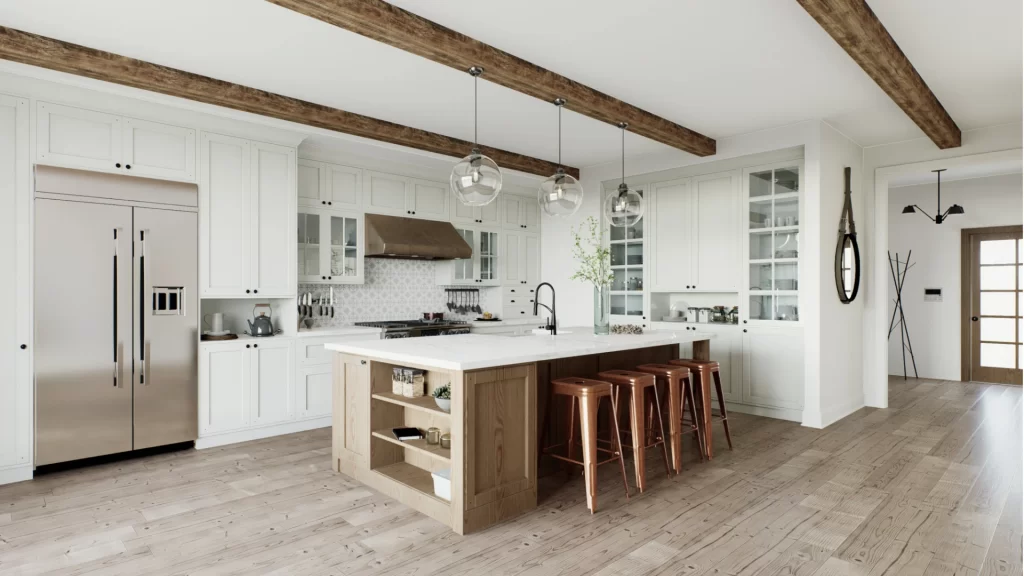
One of the biggest advantages of a Design-Build approach is making these decisions before materials are ordered.
During the design process, we help homeowners compare cabinetry, countertops, lighting, plumbing fixtures, and hardware together instead of choosing each element independently. Seeing finishes side by side often makes the right combination much more obvious.
It’s one of the reasons thoughtful planning can prevent expensive design changes later in the project.
So... Does Mixing Metal Finishes Look Intentional or Messy?
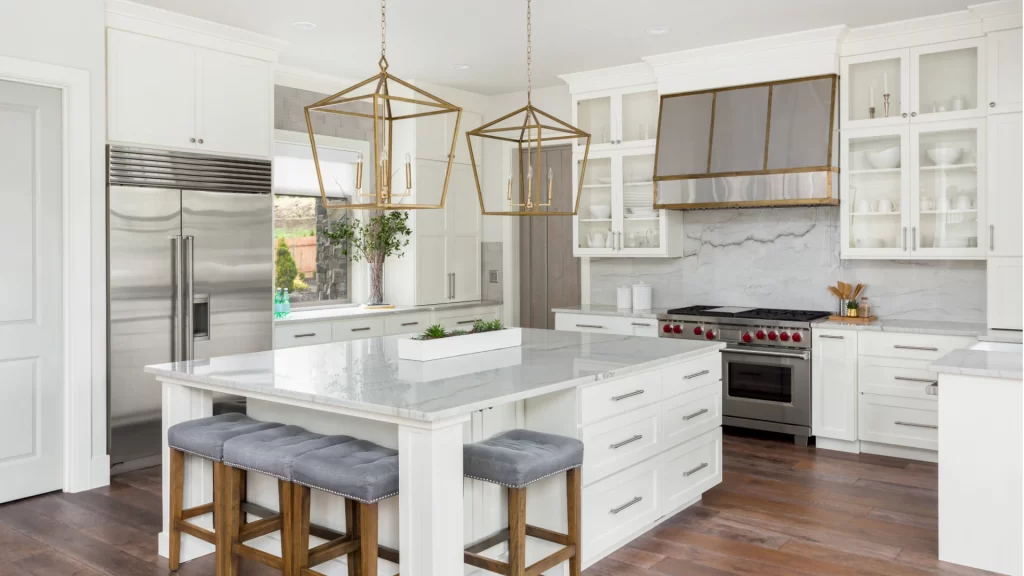
It looks intentional when every finish has a purpose.
You don’t need every fixture to match.
You do need a clear design hierarchy, repetition throughout the room, and finishes that complement the materials around them.
When those pieces come together, mixed metals create a kitchen that feels layered, timeless, and thoughtfully designed rather than trendy or cluttered.
Frequently Asked Questions
Should my kitchen faucet match my cabinet hardware?
Not necessarily. Mixing finishes is perfectly acceptable as long as each finish is repeated elsewhere in the kitchen to create visual balance.
How many metal finishes should I use?
For most kitchens, two to three finishes provide enough contrast without making the space feel busy.
Do stainless steel appliances count as one of the finishes?
Yes. Because they occupy so much visual space, stainless steel appliances should be considered part of your overall metal palette.
Will mixed metal finishes hurt resale value?
Generally, no. A cohesive, well-designed kitchen has a much greater impact on resale value than whether every metal finish matches.
Thinking About a Kitchen Remodel?
Choosing finishes is about more than following trends. It’s about creating a kitchen that reflects your style while standing the test of time.
If you’re planning a kitchen remodel in Pottstown, Collegeville, Phoenixville, Wayne, or the surrounding Southeastern Pennsylvania area, our Design-Build team can help you make confident decisions from the very beginning.